
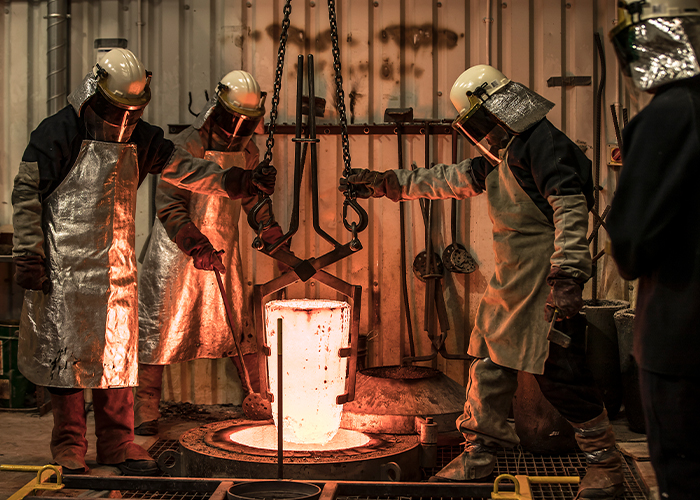
Iron ore is the starting point of steel, and steel is the material that builds nations. Every kilometre of railway track, every floor of a high-rise building, every span of a highway bridge begins with iron ore pulled from the earth. In India, iron ore production is a sector of enormous strategic importance, and the companies that mine it responsibly shape the quality and availability of steel that flows through the entire economy. Among iron ore miners in India, Sree Metaliks Limited has built a model that combines scale, sustainability, and integration in a way that sets it apart from peers who focus only on extraction without considering what happens next.
This guest post explores how iron ore production in India works, why the mining practices of individual companies matter so much, and how Sree Metaliks Limited has turned responsible mining into a competitive advantage.
India’s Iron Ore Landscape
India ranks among the top iron ore producing nations in the world, with reserves running into billions of tonnes distributed across several mineral-rich states. Odisha is the dominant producer, accounting for a large share of national output. The Keonjhar and Sundargarh districts of Odisha are particularly significant, hosting some of the country’s richest hematite deposits. Jharkhand, Karnataka, Chhattisgarh, and Goa also contribute meaningfully to India’s iron ore production tally.
The ore extracted from Indian mines is predominantly hematite, which carries a higher natural iron content and is well suited to the pelletisation and direct reduction processes that feed modern steelmaking. Magnetite deposits also exist in India but are less commonly mined at scale given the additional processing they require before use in furnaces.
The Importance of Integrated Mining Operations
From Mine to Market
Iron ore mining is most valuable when it is connected to downstream processing. Standalone miners who sell ore on the open market are subject to price volatility and depend on external buyers to absorb their production. Integrated producers, by contrast, use the ore they mine as raw material for their own downstream operations, converting it into pellets, sponge iron, billets, and finished steel products. This integration creates stability in raw material supply, reduces costs, and allows for tighter control over the quality of every product that eventually reaches the end customer.
Sree Metaliks Limited operates precisely on this integrated model. The company’s iron ore mines at Khandhbandh in Keonjhar district, Odisha, supply ore directly to its pellet plants and downstream processing facilities. With a mining and processing capacity of 1.8 MTPA of iron ore, Sree Metaliks Limited has built a supply chain where quality is controlled from the point of extraction rather than purchased as a variable from the market.
Pelletisation as a Value-Adding Step
One of the most important downstream steps that Sree Metaliks Limited applies to its mined iron ore is pelletisation. The company produces iron ore pellets at a capacity of 1.68 MTPA. Pellets are small, round balls of processed iron ore that offer superior consistency and reactivity compared to lump ore or fines. They are used as feed material in direct reduction processes to produce sponge iron and in blast furnaces for pig iron production. By pelletising its ore, Sree Metaliks Limited transforms a raw mineral into a precision-grade industrial input, adding significant value at every stage.
Responsible Mining: The Sree Metaliks Approach
Iron ore miners in India operate under a regulatory framework that includes environmental clearances, forest rights approvals, and ongoing compliance with guidelines set by the Ministry of Mines and State governments. Meeting these requirements is the legal minimum. What distinguishes responsible miners is how far they go beyond that minimum to protect the environment, rehabilitate mined land, and support the communities near their operations.
Sree Metaliks Limited treats environmental responsibility as a core part of its business identity, not simply a compliance exercise. The company covers vacant areas in and around its plant complexes with green cover, and its commitment to environmental sustainability is embedded in its stated corporate values. Its governance practices are guided by principles of ethics, integrity, and transparency, values that the company’s leadership has upheld over more than 25 years of operation.
The company’s captive power plant, located at Loidapada in Odisha with a capacity of 28 MW, uses Waste Heat Recovery Boiler and AFBC Boiler technologies to generate electricity from industrial waste heat. This reduces the environmental cost of the company’s overall operations and reflects a systems-level thinking about resource efficiency that goes beyond standard practice in the sector.
Iron Ore Production and India’s Economic Growth
Iron ore production in India contributes to the economy at multiple levels. At the most direct level, it generates employment for skilled and unskilled workers in mining, processing, logistics, and associated services. At a broader level, it enables the domestic steel industry to source raw material locally rather than importing ore from overseas, which improves the trade balance and reduces supply chain vulnerability.
As India accelerates its infrastructure programme through national initiatives covering roads, railways, metro rail, affordable housing, and port development, the demand for steel and, by extension, for domestic iron ore production will only increase. Miners who have invested in responsible, scalable operations are best placed to meet this demand reliably and sustainably. Companies like Sree Metaliks Limited, which have spent decades building integrated operations around their own mineral assets, are positioned to grow alongside the country’s infrastructure ambitions rather than scrambling to catch up.
Challenges and the Road Ahead
Iron ore miners in India face genuine challenges that require continued attention. Regulatory changes, including periodic revisions to mining lease terms and environmental compliance requirements, introduce uncertainty into long-term planning. Infrastructure bottlenecks, particularly in rail and road access to remote mining areas in Odisha and Jharkhand, add to logistics costs and can slow delivery timelines. Seasonal disruptions during heavy monsoon rainfall affect open-cast mining operations and require producers to maintain buffer stocks to keep downstream plants running.
Despite these challenges, the long-term outlook for iron ore production in India remains positive. The combination of large reserve bases, growing domestic demand, improving logistics infrastructure, and a global shift toward sustainable steelmaking creates the conditions for continued investment and growth. Miners who build their operations around quality, integration, and sustainability will be the ones who thrive in this environment.
Conclusion
Iron ore production in India is far more than a matter of moving rock from the ground. It is the starting point of a value chain that ultimately determines the strength of the buildings, bridges, and infrastructure that hundreds of millions of people depend on every day. Iron ore miners in India who approach their work with discipline, technology, and a genuine commitment to sustainability are contributing something of lasting national importance.
Sree Metaliks Limited exemplifies this approach. With its own iron ore mines in Keonjhar, Odisha, a pelletisation capacity of 1.68 MTPA, a fully integrated downstream production chain, and a corporate culture grounded in ethics and environmental responsibility, the company has established itself as one of the most dependable and forward-thinking names in Indian iron ore production. For stakeholders across the steel value chain, Sree Metaliks Limited represents a model worth studying and a partner worth considering.